DAMA 2: Privacy-Preserving Infrastructure for Tokenized Capital Markets
Table of Contents

Initiatives like Project Guardian and the Digital Asset Management Access (DAMA 2) framework represent the financial industry's most serious attempts to bring real-world assets onchain, interacting with the new liquidity pools and financial applications that are being established there.
But institutional adoption of public blockchains like Ethereum or Solana faces a fundamental constraint: traditional finance operates under strict confidentiality norms and requirements. Trade details, counterparty relationships and portfolio positions are proprietary information that market participants cannot expose publicly without sacrificing competitive advantage. At the same time, regulators require visibility into these same transactions to monitor systemic risk, enforce compliance, and maintain market integrity.
The solution to this privacy paradox is Project Guardian architecture now being developed by Deutsche Bank, the Monetary Authority of Singapore (MAS), Axelar, and other partners.
DAMA 2 outlines a private tokenization and servicing environment that maintains transaction-level confidentiality while settling to a public Layer 1 for security and finality. In this model, sensitive trade data stays within a permissioned execution environment, while settlement proofs anchor to a public chain and can interoperate with any blockchain through Axelar.
This approach preserves institutional privacy, enables cross-chain connectivity, and establishes the regulatory footing needed for large-scale tokenized asset operations without yet introducing the more technical components behind the design.
Ensuring Transaction-Level Confidentiality With Prividium
Project Guardian uses ZKsync Prividium architecture to create confidentiality through three core mechanisms working in concert.
First, a single centralized sequencer validates Layer 2 transactions, maintaining the speed and settlement guarantees institutions require while controlling access to transaction data. Unlike public chains where mempool visibility exposes pending transactions, this sequencer operates within a permissioned environment where transaction details remain restricted.
Second, dedicated Prividium RPC endpoints logically separate transaction visibility per participant. Each market participant accesses only their own activity through isolated endpoints. A bank executing an asset trade sees its transactions, positions, and settlement status, but cannot observe other institutions' flows or portfolio changes. This logical separation prevents private information from being exposed while maintaining a shared settlement layer.
Third, confidential data stays off-chain entirely. Layer 1 transactions function as pointers to off-chain records rather than containing transaction details directly. Onchain settlement references these records cryptographically without exposing underlying trade parameters, counterparties, or values. This design preserves blockchain finality and auditability while keeping sensitive commercial information out of publicly accessible ledgers.

How Privacy Coexists With Regulatory Access
Confidentiality without oversight creates regulatory risk. Prividium solves this through cryptographic mechanisms that separate participant privacy from regulatory transparency.
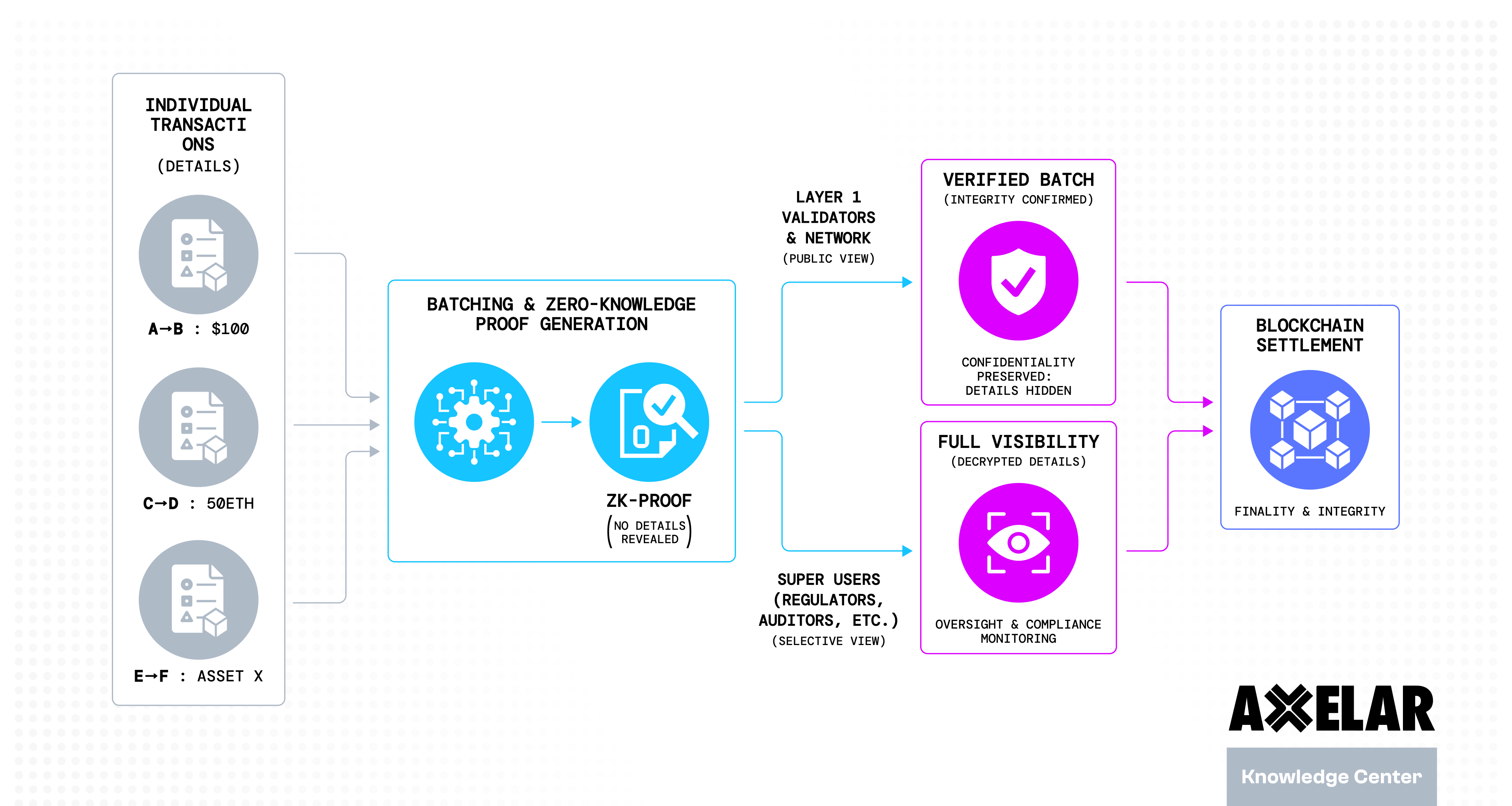
Zero-knowledge proofs enable entire batches of transactions to be validated on Layer 1 without revealing individual transaction details. Validators and the broader network can verify that all transactions in a batch are properly signed, correctly executed, and accurately settled without accessing the contents of those transactions. This preserves the integrity and finality properties of blockchain settlement while preventing broad visibility into confidential activity.
Critically, this confidentiality is selective rather than absolute. Designated "super users" like regulators, compliance officers, or auditors can be granted full visibility across all transactions within their jurisdiction. A financial regulator monitoring for market manipulation or systemic risk concentration can view complete transaction flows, position sizes, and counterparty relationships across all participants. These oversight capabilities operate independently of participant-level confidentiality, creating a two-tier transparency model where commercial confidentiality and regulatory supervision coexist.

Standards such as ERC-7984 formalize these selective disclosure mechanisms, enabling controlled data-access policies that specify who can view what information under which conditions. Institutions can define granular permissions that allow auditors to see their positions while restricting competitor visibility, or provide regulators real-time access while maintaining commercial confidentiality. These programmable access controls turn privacy into a configurable parameter rather than a binary choice.
Compliant Privacy is the Launchpad for Widespread Institutional Adoption
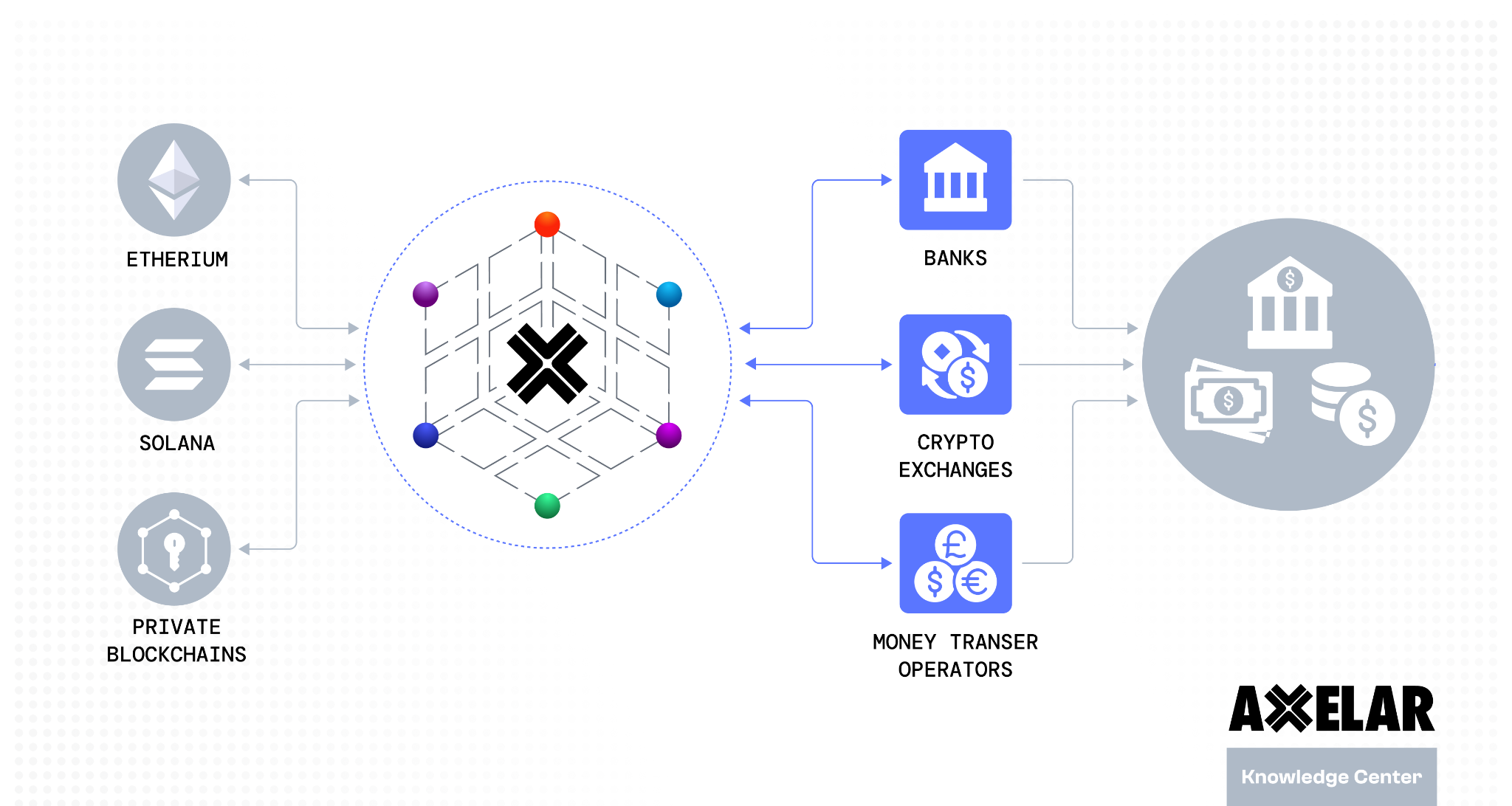
The permissioned Validium model implemented through Prividium delivers the private-but-compliant onchain infrastructure institutions require: confidentiality that protects competitive information, selective transparency that enables counterparty trust and compliance, and regulatory assurance through cryptographic proof systems that preserve oversight capabilities. Axelar provides the connectivity layer that links this permissioned execution environment to public blockchains, enabling secure, interoperable settlement without exposing confidential data.
This design resolves the core tension preventing institutional-scale tokenized asset adoption. Traditional finance cannot operate in environments where every transaction is publicly visible, but regulators cannot accept opaque systems that hide systemic risk or enable illicit activity. Prividium's architecture makes confidential, compliant, institutional-grade tokenized asset markets technically viable at scale.
As DAMA 2 and Project Guardian move from pilots to production, privacy-preserving infrastructure will determine whether tokenized assets remain experimental or become core financial market infrastructure. The institutions that lead this transition will be those that solve for privacy and compliance simultaneously, and the infrastructure that enables that balance will define the next generation of capital markets.